
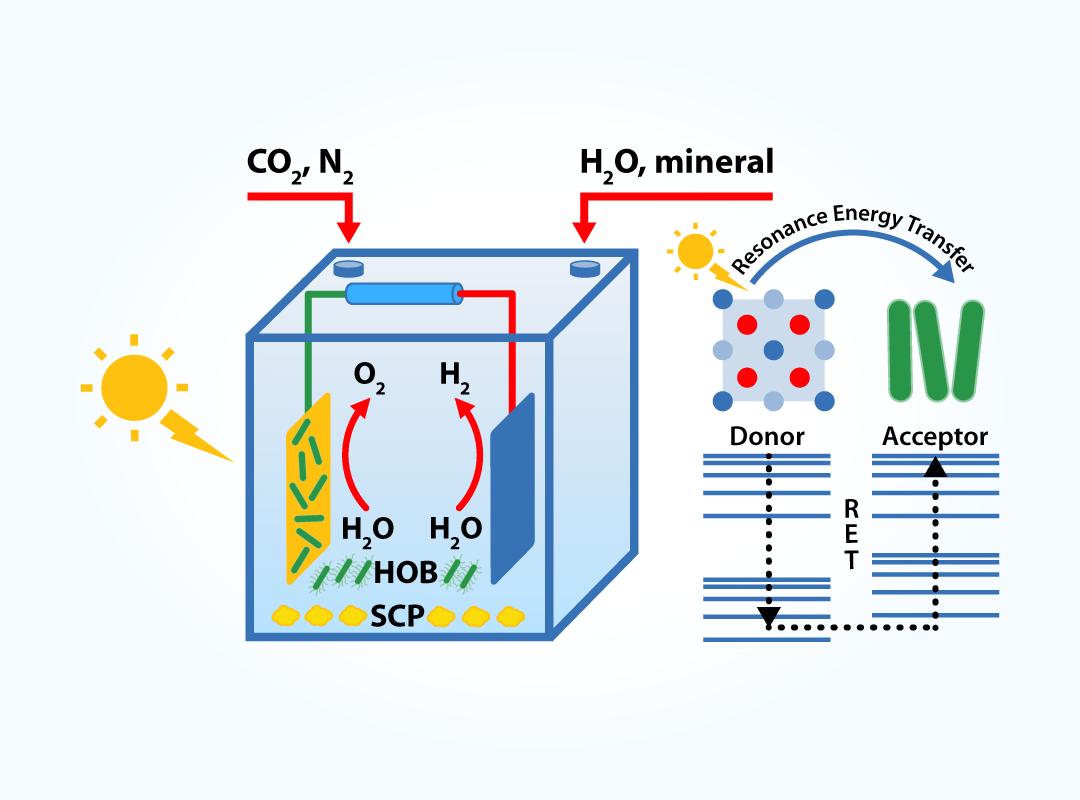
Sunlight produces sustainable food
With the continuous rise in global population, the demand for plant- and animal-derived protein is rapidly increasing. Conventional protein production poses serious environmental challenges, including high greenhouse gas emissions, excessive water use, and significant land requirements. High-protein microbial biomass, or single-cell protein, offers a sustainable alternative when produced using solar energy and renewable feedstocks. In our research lab, we are developing a standalone system that integrates bio-hybrid photoelectrodes with autotrophic microorganisms (primarily chemoautotrophic bacteria) to produce single-cell protein from sunlight, water, and atmospheric CO2 and N2. We specifically investigate the activity of hydrogen-oxidizing bacteria (HOB) for protein synthesis, with particular focus on green hydrogen as an energy source and explore photoautotrophic microorganisms that directly convert solar energy into protein. To optimize system efficiency, we particularly address the mismatch between photoelectrochemical and biological reaction rates, improve charge separation and transfer at the cell-electrode interface through materials engineering, and enhance the stability of bio-hybrid photoelectrodes for long-term operation.